

As a supplier of Energy Storage System (ESS) batteries, understanding the discharging rate of an ESS battery is crucial for both us and our customers. The discharging rate directly impacts the performance, efficiency, and application scenarios of the ESS batteries we provide. In this blog, we will delve into what the discharging rate of an ESS battery is, its significance, and how it relates to our products such as ess module battery, lithium ion battery ess container, and ESS Battery Pack.
What is the Discharging Rate of an ESS Battery?
The discharging rate of an ESS battery refers to the speed at which the battery releases its stored electrical energy. It is typically expressed in terms of a C - rate. The C - rate is a measure that compares the discharge current of a battery to its rated current. For example, a 1C discharge rate means that the battery is being discharged at a current equal to its rated current. If a battery has a rated capacity of 100 amp - hours (Ah) and is being discharged at a 1C rate, the discharge current is 100 amperes (A), and it will theoretically take 1 hour to fully discharge the battery from a fully charged state.
A 2C discharge rate would mean that the battery is being discharged at a current twice its rated current. Using the same 100Ah battery as an example, a 2C discharge rate would result in a discharge current of 200A, and the battery would be fully discharged in approximately 0.5 hours. Conversely, a 0.5C discharge rate implies that the discharge current is half of the rated current. So, for the 100Ah battery, a 0.5C discharge rate would give a discharge current of 50A, and it would take about 2 hours to fully discharge the battery.
Significance of the Discharging Rate
1. Power Output
The discharging rate determines the power output of the ESS battery. Higher C - rates allow the battery to deliver more power in a shorter period. This is essential in applications where a sudden and large amount of power is required, such as in emergency backup power systems. For instance, during a power outage, a data center may need a high - power ESS battery to quickly supply electricity to critical equipment. A battery with a high discharging rate can meet this demand, ensuring the continuous operation of the data center.
2. Application Suitability
Different applications have different requirements for the discharging rate of ESS batteries. For stationary energy storage systems used in grid - connected applications, a relatively lower discharging rate may be sufficient. These systems are often used for load shifting, where the battery stores energy during off - peak hours and releases it during peak hours. A lower discharging rate allows for a more controlled and efficient energy release over a longer period.
On the other hand, in electric vehicles (EVs) and some industrial applications, high discharging rates are necessary. EVs need to be able to accelerate quickly, which requires the battery to deliver a large amount of power in a short time. Similarly, industrial machinery that requires rapid start - up and high - power operation also depends on ESS batteries with high discharging rates.
3. Battery Lifespan
The discharging rate can also have a significant impact on the lifespan of an ESS battery. High discharging rates generate more heat and put more stress on the battery's internal components. This can lead to accelerated degradation of the battery, reducing its overall lifespan. Therefore, it is important to balance the need for high - power output with the long - term health of the battery.

Discharging Rate and Our ESS Battery Products
1. ess module battery
Our ess module battery is designed to offer a range of discharging rates to meet different customer needs. For applications that require a stable and continuous power supply, such as small - scale residential energy storage systems, we can provide modules with lower discharging rates. These modules are optimized for long - term, slow - discharge operation, which helps to extend the battery's lifespan and ensure reliable performance over time.
For commercial and industrial applications where high - power output is required, our ess module batteries can be configured to have higher discharging rates. We use advanced battery management systems (BMS) to monitor and control the discharging process, ensuring that the battery operates within a safe and efficient range even at high C - rates.
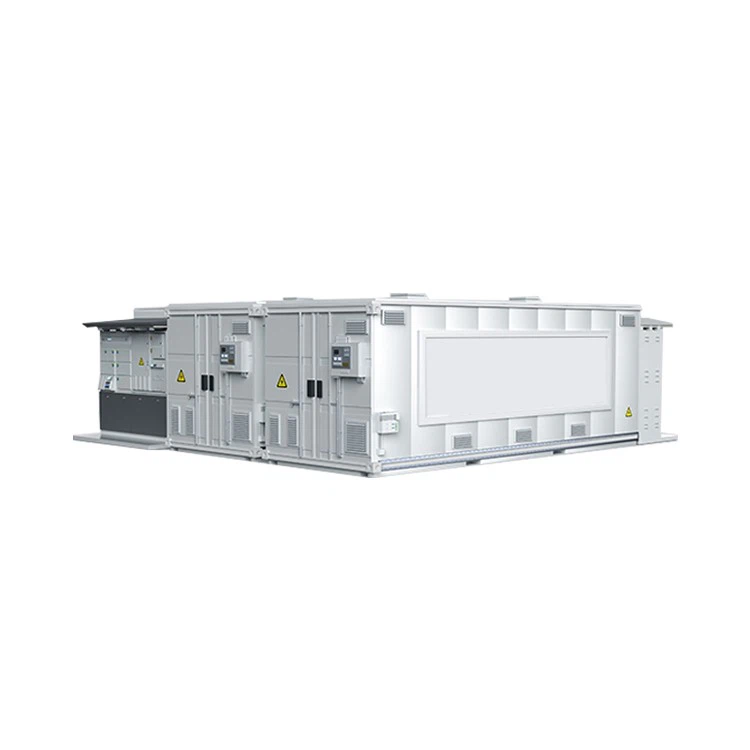
2. lithium ion battery ess container
The lithium ion battery ess container is a complete energy storage solution that combines multiple battery modules. The discharging rate of the container is determined by the combined performance of the individual modules and the design of the overall system. Our lithium ion battery ess containers are engineered to provide high - power output when needed, while also maintaining a high level of safety and reliability.
The container is equipped with a sophisticated thermal management system to dissipate the heat generated during high - rate discharging. This helps to prevent overheating and ensures the long - term stability of the battery system. Additionally, the BMS in the container continuously monitors the state of charge and the discharging rate of each module, allowing for precise control and optimization of the energy release process.
3. ESS Battery Pack
Our ESS Battery Pack is a compact and portable energy storage solution that is suitable for a variety of applications, including off - grid power systems and mobile devices. The discharging rate of the battery pack is carefully calibrated to balance power output and battery life.
For portable applications, such as powering camping equipment or small - scale outdoor events, the battery pack can provide a moderate discharging rate to ensure a reasonable runtime. At the same time, it can also be designed to deliver a higher discharging rate for short - term high - power applications, such as starting a small generator or powering a high - wattage tool.
Factors Affecting the Discharging Rate
1. Battery Chemistry
Different battery chemistries have different capabilities when it comes to discharging rates. Lithium - ion batteries, for example, are known for their relatively high discharging rates compared to lead - acid batteries. Lithium - ion batteries have a lower internal resistance, which allows them to deliver high currents more easily. Other battery chemistries, such as nickel - metal hydride (NiMH) batteries, also have their own characteristic discharging rates, which are influenced by their chemical composition and structure.
2. Temperature
Temperature has a significant impact on the discharging rate of an ESS battery. At low temperatures, the battery's internal resistance increases, which reduces its ability to deliver high currents. This means that the discharging rate may be limited at cold temperatures. On the other hand, high temperatures can also be problematic. Excessive heat can cause the battery to degrade more quickly and may even pose a safety risk. Therefore, maintaining an optimal temperature range is crucial for achieving the desired discharging rate and ensuring the long - term performance of the battery.
3. State of Charge (SOC)
The state of charge of the battery also affects the discharging rate. As the battery discharges, its voltage decreases, and the available energy also reduces. At a low state of charge, the battery may not be able to maintain a high discharging rate. This is because the chemical reactions inside the battery become less efficient as the SOC decreases.
Conclusion
Understanding the discharging rate of an ESS battery is essential for both battery suppliers like us and our customers. It determines the power output, application suitability, and lifespan of the battery. Our company offers a wide range of ESS battery products, including ess module battery, lithium ion battery ess container, and ESS Battery Pack, which are designed to meet different discharging rate requirements.
Whether you are looking for a battery for a stationary energy storage system, an electric vehicle, or a portable application, we can provide you with the right solution. If you are interested in our ESS battery products and would like to discuss your specific requirements, please feel free to contact us for a procurement negotiation. We are committed to providing high - quality, reliable ESS batteries that meet your energy storage needs.
References
- Linden, D., & Reddy, T. B. (2002). Handbook of Batteries. McGraw - Hill.
- Tarascon, J. M., & Armand, M. (2001). Issues and challenges facing rechargeable lithium batteries. Nature, 414(6861), 359 - 367.