

Hey there! As an ESS battery pack supplier, I often get asked about the charge - discharge efficiency of an ESS battery pack. So, let's dive right into it and break down what this term means and why it's super important.
First off, what exactly is charge - discharge efficiency? In simple terms, it's a measure of how well a battery can convert electrical energy during the charging and discharging processes. When you charge an ESS battery pack, not all of the energy you put in will be stored. Some of it is lost as heat or through other inefficiencies. Similarly, when you discharge the battery, there are also losses. Charge - discharge efficiency is the ratio of the energy output during discharge to the energy input during charging, usually expressed as a percentage.
Let's say you put 100 kilowatt - hours (kWh) of energy into an ESS battery pack during charging. If, during the discharging process, you get 90 kWh of usable energy out, then the charge - discharge efficiency of that battery pack is 90%. The higher the percentage, the more efficient the battery is at storing and releasing energy.
There are several factors that can affect the charge - discharge efficiency of an ESS battery pack. One of the most significant factors is the type of battery chemistry. For example, lithium - ion batteries, which are commonly used in ESS Battery Packs, generally have a high charge - discharge efficiency, often ranging from 90% to 95%. This is because lithium - ion batteries have a relatively low internal resistance, which means less energy is lost as heat during the charging and discharging processes.
On the other hand, lead - acid batteries, which were more commonly used in the past, have a lower charge - discharge efficiency, usually around 70% to 80%. They have a higher internal resistance, which leads to more energy being dissipated as heat.

Another factor that can impact efficiency is the charging and discharging rate. If you charge or discharge a battery pack too quickly, it can generate more heat and increase internal resistance, leading to lower efficiency. For instance, if you try to charge a battery at a very high current, the battery may heat up significantly, and some of the energy will be wasted as heat instead of being stored. So, it's important to follow the recommended charging and discharging rates specified by the battery manufacturer.
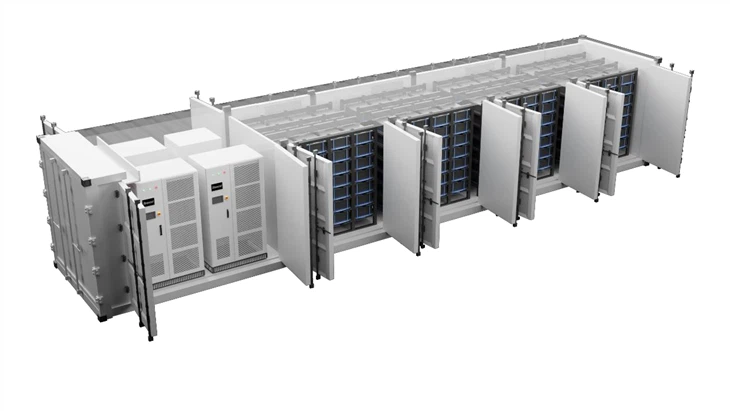
The temperature also plays a crucial role in charge - discharge efficiency. Batteries tend to perform best within a certain temperature range. If the temperature is too low, the chemical reactions inside the battery slow down, which can reduce the efficiency. Conversely, if the temperature is too high, it can cause the battery to degrade faster and also lead to increased energy losses. For lithium ion battery ess container, proper thermal management systems are often installed to maintain the optimal temperature for the batteries.
Now, why is charge - discharge efficiency so important? Well, for one, it directly affects the overall cost - effectiveness of an ESS Battery System. A more efficient battery pack means that you can store and use more of the energy you put in, which can save you money in the long run. For example, if you're using an ESS system for your home or business to store excess solar energy, a high - efficiency battery pack will allow you to make the most of that energy and reduce your reliance on the grid.
In addition, high charge - discharge efficiency is also beneficial for the environment. When a battery is more efficient, less energy is wasted, which means less fossil fuel - based electricity is needed to make up for the losses. This can help reduce greenhouse gas emissions and contribute to a more sustainable energy future.
As an ESS battery pack supplier, I'm always looking for ways to improve the charge - discharge efficiency of our products. We work closely with battery manufacturers to develop and source the best battery chemistries and technologies. We also invest in research and development to optimize the design of our battery packs, including features like advanced thermal management and smart charging algorithms.
When choosing an ESS battery pack, it's important to consider the charge - discharge efficiency as one of the key factors. You should look for a battery pack with a high efficiency rating, but also make sure that it meets your specific energy storage needs in terms of capacity, power output, and cycle life.
If you're interested in learning more about our ESS battery packs or have any questions about charge - discharge efficiency, don't hesitate to reach out. We're here to help you find the best energy storage solution for your needs. Whether you're a homeowner looking to store solar energy or a business owner wanting to reduce your electricity costs, we've got the expertise and products to meet your requirements.
In conclusion, charge - discharge efficiency is a critical parameter for ESS battery packs. It determines how effectively a battery can store and release energy, and it has a significant impact on cost, performance, and environmental sustainability. By understanding the factors that affect efficiency and choosing a high - quality battery pack, you can make the most of your energy storage investment.
So, if you're in the market for an ESS battery pack, get in touch with us for a detailed discussion. We'll be happy to provide you with all the information you need and guide you through the purchasing process.
References
- Battery University: A comprehensive resource for battery - related information.
- IEEE Transactions on Energy Conversion: A leading journal in the field of energy conversion, which often publishes research on battery efficiency.