

As a provider of low voltage lithium batteries, I understand the critical importance of accurately detecting the state of charge (SOC) of these batteries. Whether you're using our Stackable Lithium Power Pack for portable applications or Low Voltage Lithium Ion Battery Systems in larger setups, knowing the SOC is essential for optimal performance, safety, and longevity. In this blog post, I'll share some of the most effective methods for detecting the state of charge of low voltage lithium batteries.
Open Circuit Voltage (OCV) Method
The Open Circuit Voltage (OCV) method is one of the simplest and most widely used techniques for estimating the SOC of a lithium battery. This method relies on the fact that there is a direct relationship between the battery's voltage and its state of charge. When a battery is at rest (i.e., not being charged or discharged), its voltage can be measured, and this voltage can be correlated to a specific SOC value.
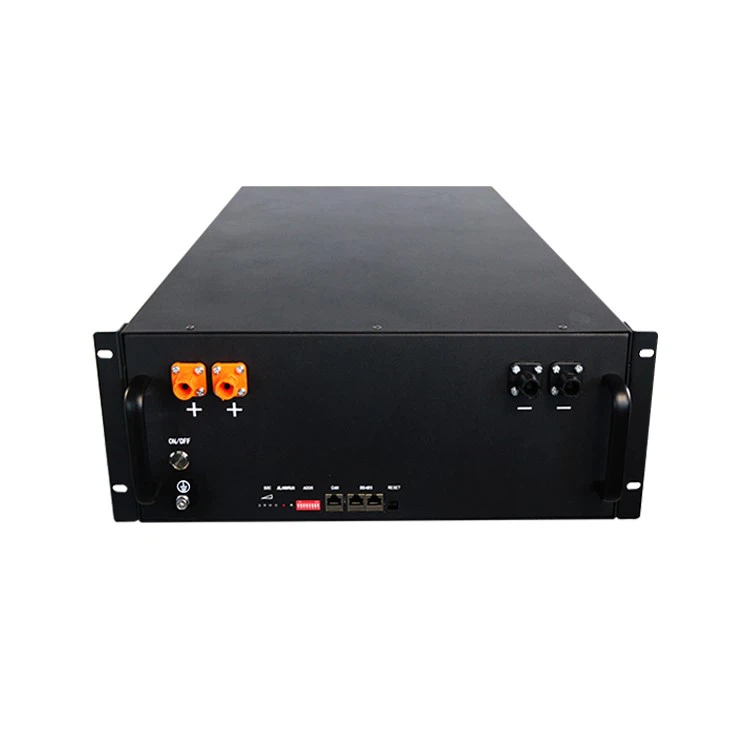

To use the OCV method, you need to first let the battery rest for a sufficient period (usually several hours) to ensure that the voltage stabilizes. Then, you measure the battery's open circuit voltage using a voltmeter. Once you have the voltage reading, you can refer to a pre - established OCV - SOC curve for the specific type of lithium battery you are using. These curves are typically provided by battery manufacturers and show the relationship between the battery's open circuit voltage and its state of charge.
However, it's important to note that the OCV - SOC relationship can be affected by factors such as temperature, battery age, and the rate of charge or discharge. For example, at lower temperatures, the battery's voltage may be lower for a given SOC compared to higher temperatures. Therefore, it's necessary to have OCV - SOC curves for different temperature ranges to get more accurate SOC estimates.
Coulomb Counting Method
The Coulomb Counting method, also known as ampere - hour counting, is another popular way to determine the state of charge of a lithium battery. This method works by keeping track of the amount of charge that has been put into or taken out of the battery.
To implement the Coulomb Counting method, you need to measure the current flowing in and out of the battery over time. The current is integrated over time to calculate the total charge transferred. If you know the initial state of charge of the battery, you can then calculate the current state of charge by adding or subtracting the amount of charge transferred.
Mathematically, the SOC at a given time (t) can be calculated as:
[SOC(t)=SOC(0)+\frac{1}{C_{rated}}\int_{0}^{t}I(\tau)d\tau]
where (SOC(0)) is the initial state of charge, (C_{rated}) is the rated capacity of the battery, and (I(\tau)) is the current flowing through the battery at time (\tau).
One of the advantages of the Coulomb Counting method is that it can provide real - time SOC information. However, it has some limitations. For instance, it requires accurate current measurement, and any errors in current measurement can accumulate over time, leading to inaccurate SOC estimates. Also, it does not account for self - discharge of the battery, which can cause the actual SOC to be lower than the estimated SOC over time.
Impedance - Based Methods
Impedance - based methods involve measuring the electrical impedance of the battery to estimate its state of charge. The impedance of a lithium battery changes as its state of charge changes. By measuring the battery's impedance at different frequencies, it is possible to obtain information about the battery's internal electrochemical processes and correlate this information to the state of charge.
There are several ways to measure the battery's impedance. One common approach is to apply a small AC signal to the battery and measure the resulting voltage and current responses. The impedance can then be calculated as the ratio of the voltage to the current.
Impedance - based methods can provide more detailed information about the battery's internal state compared to the OCV and Coulomb Counting methods. However, they are more complex and require specialized equipment for impedance measurement. Additionally, the relationship between impedance and SOC can be affected by factors such as temperature and battery age, which need to be taken into account for accurate SOC estimation.
Model - Based Methods
Model - based methods use mathematical models to describe the behavior of the lithium battery and estimate its state of charge. These models can be based on physical principles, such as electrochemical reactions occurring inside the battery, or they can be empirical models that are developed based on experimental data.
One example of a model - based approach is the equivalent circuit model. In an equivalent circuit model, the battery is represented by a combination of electrical components such as resistors, capacitors, and voltage sources. The parameters of these components are adjusted to match the battery's actual behavior, and the model can then be used to simulate the battery's voltage and current responses under different operating conditions.
To estimate the state of charge using a model - based method, you need to input measured data such as current and voltage into the model and then use an estimation algorithm, such as the Kalman filter or the Particle filter, to update the SOC estimate based on the model's predictions and the measured data.
Model - based methods can provide relatively accurate SOC estimates, especially when the models are well - calibrated. However, they require significant computational resources and knowledge of battery modeling and estimation techniques.
Combining Multiple Methods
In practice, the most accurate way to detect the state of charge of a low voltage lithium battery is often to combine multiple methods. For example, you can use the OCV method to get an initial estimate of the SOC when the battery is at rest. Then, during the charging or discharging process, you can use the Coulomb Counting method to track the change in SOC. Additionally, impedance - based or model - based methods can be used to correct any errors in the SOC estimates obtained from the other methods.
By combining these methods, you can take advantage of the strengths of each method while minimizing their weaknesses. This approach can lead to more accurate and reliable SOC estimates, which is crucial for applications where the performance and safety of the battery are of utmost importance.
Importance of Accurate SOC Detection for Our Low Voltage Lithium Batteries
At our company, we offer a wide range of Low Voltage Lithium Battery products, from small portable batteries to large - scale battery systems. Accurate state of charge detection is vital for the proper functioning of these batteries.
For our customers, knowing the exact state of charge of their batteries allows them to plan their usage more effectively. For example, in portable applications such as handheld devices or electric bicycles, users can know when to recharge their batteries to avoid sudden power outages. In larger battery systems used in renewable energy storage or backup power applications, accurate SOC detection helps in optimizing the charging and discharging cycles, which can extend the battery's lifespan and improve the overall efficiency of the system.
Moreover, accurate SOC detection is also important for battery safety. Overcharging or over - discharging a lithium battery can lead to safety hazards such as thermal runaway, which can cause the battery to catch fire or explode. By accurately monitoring the state of charge, we can ensure that our batteries are always operated within their safe operating limits.
Conclusion
Detecting the state of charge of a low voltage lithium battery is a complex but essential task. There are several methods available, each with its own advantages and limitations. As a low voltage lithium battery provider, we recommend using a combination of methods to achieve the most accurate SOC estimates.
If you are interested in our low voltage lithium battery products and would like to learn more about how we ensure accurate state of charge detection in our batteries, or if you have any other questions regarding our products, we encourage you to reach out to us for a procurement discussion. We are committed to providing high - quality batteries and excellent customer service to meet your specific needs.
References
- Battery Management Systems: Design by Modeling and Identification, by Patrick R. N. Childs
- Lithium - Ion Batteries: Science and Technologies, by Yoshio Nishi, Akihiro Kozawa, and Masaki Yoshio