

Hey there, folks! I'm a supplier of 48V 100Ah lithium iron phosphate batteries, and I often get asked this question: "How long can a 48V 100Ah lithium iron phosphate battery last?" Well, let's dive right in and break it down.
Understanding the Basics
First off, let's understand what those numbers mean. A 48V 100Ah lithium iron phosphate battery has a nominal voltage of 48 volts and a capacity of 100 amp - hours. The voltage tells us how much "push" the battery can give to the electrical current, while the amp - hour rating gives us an idea of how much charge the battery can store.
To get a rough estimate of the energy the battery can hold, we use the formula: Energy (in watt - hours) = Voltage (in volts) × Capacity (in amp - hours). So, for our 48V 100Ah battery, the energy capacity is 48V × 100Ah = 4800 watt - hours or 4.8 kilowatt - hours.
Factors Affecting Battery Lifespan
But the actual "last - time" of the battery is influenced by a bunch of factors.
Discharge Rate
The rate at which you discharge the battery matters a lot. If you're using a high - power device that draws a large amount of current from the battery all at once (high discharge rate), the battery won't last as long as when you're using a low - power device with a small current draw (low discharge rate). For example, if you have a device that draws 100 amps continuously from the 100Ah battery, in theory, it might discharge in about an hour. But in real life, high - rate discharging can also reduce the battery's overall performance and lifespan over time.
Temperature
Temperature is another crucial factor. Lithium iron phosphate batteries work best in a moderate temperature range, usually between 20 - 30°C (68 - 86°F). If it's too hot, say above 40°C (104°F), the battery's chemical reactions speed up, which can lead to faster degradation. On the flip side, cold temperatures below 0°C (32°F) can increase the internal resistance of the battery, reducing its available capacity and how long it can power your devices.
Depth of Discharge (DoD)
The depth of discharge refers to how much of the battery's charge you use before recharging it. Lithium iron phosphate batteries generally have a long cycle life, especially when they're not deeply discharged. For instance, if you only discharge the battery to 20% (80% DoD) and then recharge it, the battery will last for many more charge - discharge cycles compared to if you always discharge it to 90% (10% remaining capacity).
Charging Habits
How you charge the battery also affects its lifespan. Overcharging or using an improper charger can damage the battery. For our 48V 100Ah lithium iron phosphate battery, it's essential to use a charger specifically designed for this type of battery and follow the manufacturer's charging instructions.
Real - World Examples
Let's look at some real - world scenarios to get a better idea of how long the battery can last.
Powering a Small Home Appliance
Say you want to power a small 100 - watt LED light. Using the energy capacity of our 48V 100Ah battery (4800 watt - hours), we can calculate the runtime. Runtime (in hours)= Energy (in watt - hours)/Power (in watts). So, 4800 watt - hours/100 watts = 48 hours. But remember, this is an ideal situation, and in reality, there might be some losses in the battery and the charging/discharging process, so the actual runtime might be a bit less.
Powering an Electric Vehicle
If you're using the battery to power an electric vehicle, the runtime will be different. Electric vehicles have different power requirements depending on their size, speed, and driving conditions. Let's assume an electric vehicle has an average power consumption of 500 watts. Then, the calculated runtime would be 4800 watt - hours/500 watts = 9.6 hours. But again, driving on hilly terrain, at high speeds, or with a heavy load will increase the power consumption and reduce the battery's runtime.
Our Product Range
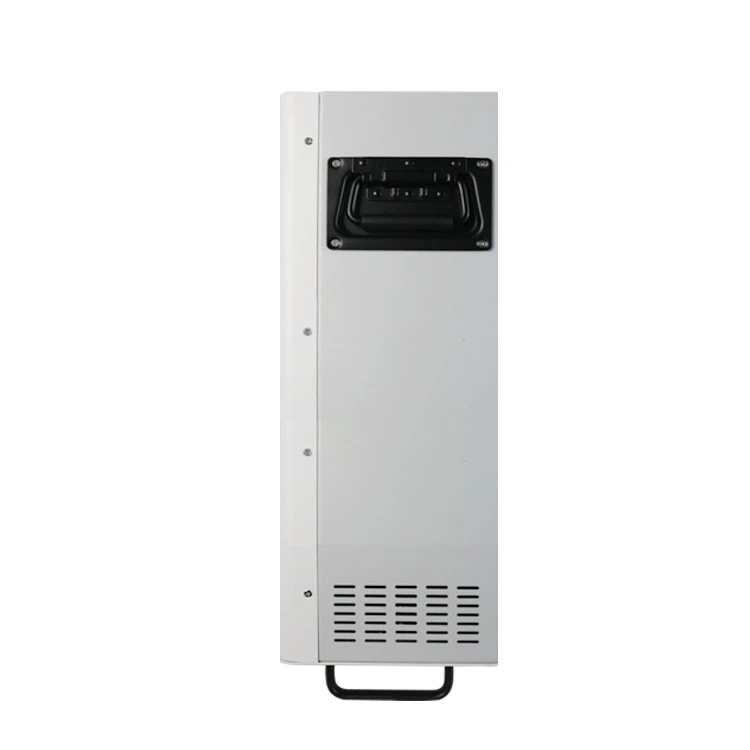
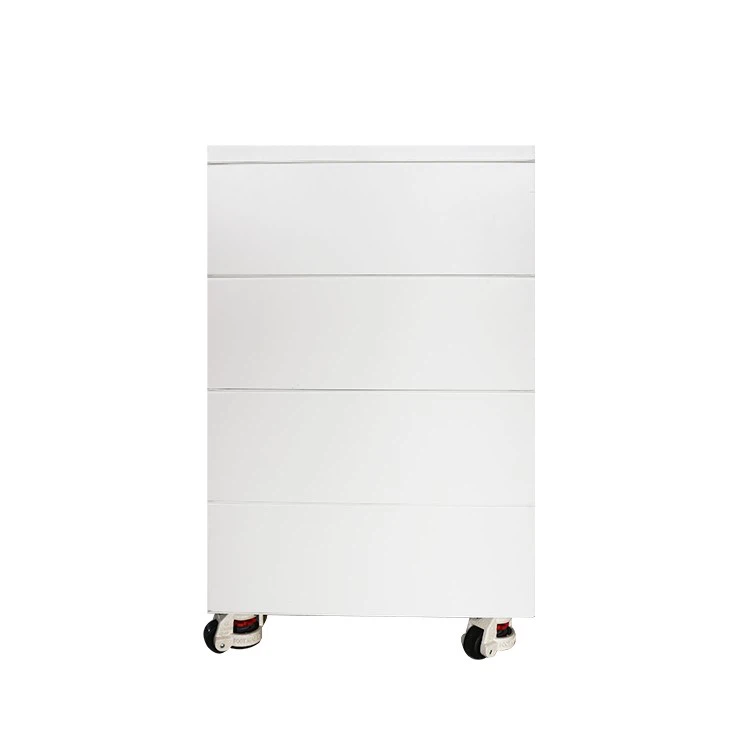
As a supplier, we not only offer 48V 100Ah lithium iron phosphate batteries but also a range of related products. Check out our Stackable Lithium Power Pack, which allows you to increase your power storage capacity easily by stacking multiple units together. Our Low Voltage Lithium Battery series is designed for a variety of applications, providing reliable and efficient power. And if you're looking for a more space - saving option, our Wall Mounted Lithium Battery pack is a great choice.
The Long - Term Picture
Lithium iron phosphate batteries are known for their long cycle life. They can typically handle 2000 - 3000 charge - discharge cycles, especially when used under proper conditions. That means if you cycle the battery once a day, it could last you for about 5 - 8 years. However, if you subject the battery to harsh conditions like extreme temperatures, high - rate discharging, or frequent deep discharges, its lifespan will be significantly reduced.
Conclusion
So, to answer the question "How long can a 48V 100Ah lithium iron phosphate battery last?", it depends on many factors such as discharge rate, temperature, depth of discharge, and charging habits. In ideal conditions, it can power small low - power devices for a long time, and when it comes to long - term use, it can handle thousands of charge - discharge cycles.
If you're interested in purchasing our 48V 100Ah lithium iron phosphate batteries or any of our other products, get in touch with us for a detailed quote and to discuss your specific requirements. We're here to help you find the best battery solutions for your needs.
References
- Battery University. "Lithium - Ion Basics".
- DOE's Advanced Research Projects Agency - Energy (ARPA - E). "Battery Research and Development".