

Sizing a lithium battery for your home to meet your energy needs is a crucial decision that requires careful consideration of various factors. As a supplier of Lithium Battery for Home Use, I understand the importance of ensuring that you select the right battery size to optimize your energy storage and usage. In this blog post, I will guide you through the process of sizing a lithium battery for your home, providing you with the knowledge and tools you need to make an informed decision.
Understanding Your Energy Needs
The first step in sizing a lithium battery for your home is to understand your energy needs. This involves calculating your daily energy consumption, peak power demand, and the duration of backup power you require.
Calculating Daily Energy Consumption
To calculate your daily energy consumption, you need to list all the electrical appliances and devices in your home and their power ratings. Multiply the power rating of each device by the number of hours it is used per day to get the energy consumption in watt-hours (Wh). Then, sum up the energy consumption of all devices to get your total daily energy consumption.
For example, if you have a refrigerator with a power rating of 200 watts that runs for 24 hours a day, a TV with a power rating of 100 watts that runs for 4 hours a day, and a laptop with a power rating of 50 watts that runs for 6 hours a day, your daily energy consumption would be:
Refrigerator: 200 W x 24 h = 4800 Wh
TV: 100 W x 4 h = 400 Wh
Laptop: 50 W x 6 h = 300 Wh
Total daily energy consumption: 4800 Wh + 400 Wh + 300 Wh = 5500 Wh
Determining Peak Power Demand
Peak power demand refers to the maximum amount of power your home requires at any given time. This is important because your lithium battery needs to be able to handle the peak power demand without overloading.
To determine your peak power demand, you need to identify the appliances and devices that consume the most power simultaneously. For example, if you have an air conditioner, a washing machine, and a microwave running at the same time, you need to add up their power ratings to get the peak power demand.
Considering Backup Power Duration
Backup power duration refers to the amount of time you want your lithium battery to provide power in the event of a power outage. This depends on your specific needs and preferences. For example, if you live in an area with frequent power outages, you may want a battery that can provide power for several hours or even days.
Selecting the Right Battery Capacity
Once you have determined your energy needs, the next step is to select the right battery capacity. Battery capacity is measured in ampere-hours (Ah) or watt-hours (Wh). To calculate the battery capacity you need, you can use the following formula:
Battery capacity (Wh) = Daily energy consumption (Wh) x Backup power duration (h) / Battery efficiency
Battery efficiency refers to the percentage of energy that the battery can store and deliver. Most lithium batteries have an efficiency of around 90% to 95%.
For example, if your daily energy consumption is 5500 Wh and you want a backup power duration of 8 hours, and your battery efficiency is 90%, the battery capacity you need would be:
Battery capacity (Wh) = 5500 Wh x 8 h / 0.9 = 48888.89 Wh
You can then convert the battery capacity from watt-hours to ampere-hours by dividing the watt-hours by the battery voltage. For example, if your battery voltage is 12 volts, the battery capacity in ampere-hours would be:
Battery capacity (Ah) = 48888.89 Wh / 12 V = 4074.07 Ah
Choosing the Right Battery Type
There are several types of lithium batteries available for home use, each with its own advantages and disadvantages. The most common types of lithium batteries are lithium iron phosphate (LiFePO4), lithium manganese oxide (LiMn2O4), and lithium nickel cobalt aluminum oxide (NCA).
Lithium Iron Phosphate (LiFePO4)
LiFePO4 batteries are known for their high safety, long cycle life, and high energy density. They are also less prone to thermal runaway and have a lower risk of fire compared to other types of lithium batteries. LiFePO4 batteries are a popular choice for home energy storage systems.
Lithium Manganese Oxide (LiMn2O4)
LiMn2O4 batteries have a high power density and are capable of delivering high currents. They are also relatively inexpensive and have a good cycle life. However, they have a lower energy density compared to LiFePO4 batteries.
Lithium Nickel Cobalt Aluminum Oxide (NCA)
NCA batteries have a high energy density and are capable of storing a large amount of energy. They are also lightweight and have a long cycle life. However, they are more expensive and have a higher risk of thermal runaway compared to other types of lithium batteries.
Considering Other Factors
In addition to battery capacity and type, there are several other factors you need to consider when sizing a lithium battery for your home. These include:
Battery Voltage
The battery voltage determines the amount of power the battery can deliver. Most home energy storage systems use batteries with a voltage of 12 volts, 24 volts, or 48 volts. The higher the battery voltage, the more power the battery can deliver.
Battery Charging and Discharging Rates
The battery charging and discharging rates determine how quickly the battery can be charged and discharged. You need to choose a battery with a charging and discharging rate that is compatible with your energy needs and the charging system you are using.
Battery Management System (BMS)
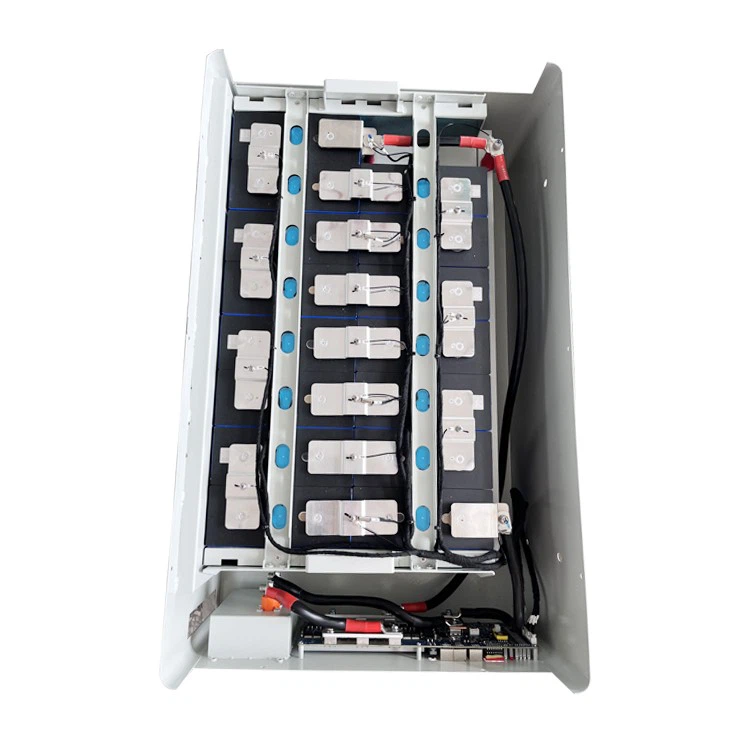
A battery management system (BMS) is a device that monitors and controls the charging and discharging of the battery. It helps to protect the battery from overcharging, over-discharging, and short-circuiting. You need to choose a battery with a reliable BMS to ensure the safety and longevity of the battery.

Installation and Maintenance
The installation and maintenance of the lithium battery are also important factors to consider. You need to ensure that the battery is installed in a safe and well-ventilated area and that it is properly maintained to ensure its optimal performance.
Conclusion
Sizing a lithium battery for your home to meet your energy needs is a complex process that requires careful consideration of various factors. By understanding your energy needs, selecting the right battery capacity and type, and considering other factors such as battery voltage, charging and discharging rates, BMS, and installation and maintenance, you can ensure that you choose the right lithium battery for your home.
As a supplier of lithium ion battery storage packs and Lithium Storage Battery Systems, we are committed to providing you with high-quality products and professional services. If you have any questions or need further assistance in sizing a lithium battery for your home, please feel free to contact us for a detailed consultation and procurement discussion.
References
- "Battery Basics." Battery University.
- "Lithium-Ion Batteries for Home Energy Storage." Energy.gov.
- "How to Size a Battery for Your Home Solar System." SolarReviews.