

In recent years, the demand for off - grid power solutions has been on the rise. With concerns over power outages, the desire for energy independence, and the push towards sustainable living, many individuals and businesses are looking for reliable ways to generate and store electricity without being connected to the main grid. One of the key components in an off - grid power system is the energy storage system (ESS) battery. As an ESS battery supplier, I am often asked whether an ESS battery can be used for off - grid applications. In this blog, I will explore this question in detail.
Understanding Off - Grid Applications
Off - grid applications refer to any power system that operates independently of the traditional electrical grid. These systems are commonly found in remote areas where grid connection is either impossible or cost - prohibitive. They can also be used in areas prone to frequent power outages or by individuals and businesses aiming to reduce their carbon footprint and gain energy self - sufficiency.
Typical off - grid power systems consist of a power generation source, such as solar panels, wind turbines, or small hydroelectric generators, and an energy storage system. The power generation source produces electricity, which is then stored in the ESS battery for use when the generation source is not producing power, such as at night or during calm weather conditions.
The Role of ESS Batteries in Off - Grid Systems
ESS batteries play a crucial role in off - grid power systems. They act as a buffer between the power generation source and the load. When the power generation source produces more electricity than the load requires, the excess electricity is stored in the ESS battery. Conversely, when the power generation source is not producing enough electricity to meet the load demand, the stored electricity in the ESS battery is discharged to power the load.
This function of ESS batteries ensures a continuous and stable power supply in off - grid systems. Without an ESS battery, the power supply would be intermittent, depending solely on the availability of the power generation source. For example, a solar - powered off - grid system would only be able to provide power during the day when the sun is shining, leaving the load without power at night.
Types of ESS Batteries Suitable for Off - Grid Applications
There are several types of ESS batteries available in the market, each with its own advantages and disadvantages. Some of the most common types of ESS batteries suitable for off - grid applications include lead - acid batteries, lithium - ion batteries, and flow batteries.
Lead - Acid Batteries
Lead - acid batteries have been around for a long time and are one of the most widely used types of batteries in off - grid systems. They are relatively inexpensive, have a simple design, and are easy to maintain. However, lead - acid batteries have a relatively short lifespan, low energy density, and require regular maintenance, such as topping up the electrolyte levels.
Lithium - Ion Batteries
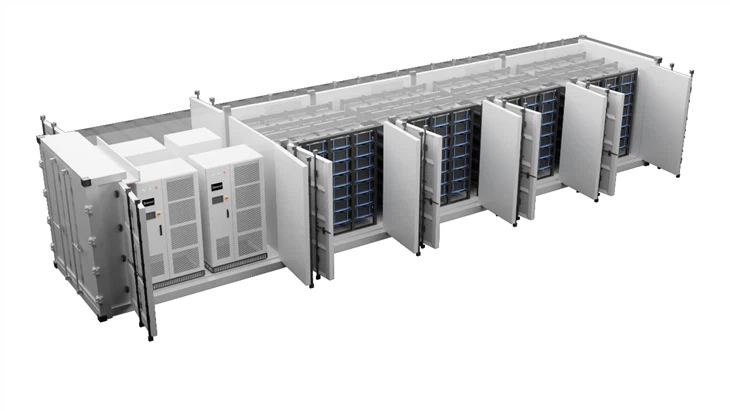
Lithium - ion batteries are becoming increasingly popular in off - grid applications due to their high energy density, long lifespan, and low self - discharge rate. They are also more efficient than lead - acid batteries, which means they can store and release more energy with less loss. Lithium - ion batteries are available in various forms, including lithium ion battery ess container, ess module battery, and ESS Battery Pack. These different forms allow for flexibility in system design and installation, making them suitable for a wide range of off - grid applications.
Flow Batteries
Flow batteries are a relatively new type of ESS battery that offers several advantages for off - grid applications. They have a long lifespan, can be easily scaled up or down, and are highly efficient. Flow batteries store energy in liquid electrolytes, which allows for a high degree of flexibility in system design. However, flow batteries are currently more expensive than lead - acid and lithium - ion batteries, which may limit their widespread adoption in off - grid systems.
Advantages of Using ESS Batteries in Off - Grid Applications
Using ESS batteries in off - grid applications offers several advantages:
Energy Independence
One of the main advantages of using ESS batteries in off - grid applications is energy independence. By storing excess electricity generated by the power generation source, users can rely on their own power supply without being dependent on the main grid. This is particularly beneficial for remote areas where grid connection is not available or for individuals and businesses that want to reduce their reliance on the grid.
Continuous Power Supply
ESS batteries ensure a continuous power supply in off - grid systems. They can store electricity during periods of high power generation and release it during periods of low power generation, ensuring that the load has a stable and reliable power supply at all times.

Reduced Environmental Impact
Off - grid systems that use renewable energy sources, such as solar and wind, in combination with ESS batteries have a significantly reduced environmental impact compared to traditional grid - connected systems. By storing excess renewable energy, ESS batteries help to maximize the use of clean energy and reduce the need for fossil - fuel - based power generation.
Challenges and Considerations
While ESS batteries offer many advantages for off - grid applications, there are also some challenges and considerations that need to be taken into account:
Cost
The cost of ESS batteries can be a significant barrier to the widespread adoption of off - grid systems. Although the cost of lithium - ion batteries has been decreasing in recent years, they are still more expensive than lead - acid batteries. Flow batteries are even more expensive, which may limit their use in cost - sensitive off - grid applications.
Battery Management
Proper battery management is essential for the long - term performance and lifespan of ESS batteries. This includes monitoring the state of charge, state of health, and temperature of the batteries. In off - grid systems, battery management can be more challenging due to the variable nature of the power generation source and the load.
Safety
ESS batteries, especially lithium - ion batteries, can pose safety risks if not properly designed, installed, and maintained. Lithium - ion batteries can overheat, catch fire, or explode if they are overcharged, over - discharged, or short - circuited. Therefore, it is important to follow strict safety guidelines when using ESS batteries in off - grid applications.
Conclusion
In conclusion, ESS batteries can be effectively used for off - grid applications. They play a crucial role in ensuring a continuous and stable power supply in off - grid systems, offering energy independence, reduced environmental impact, and other benefits. While there are some challenges and considerations, such as cost, battery management, and safety, these can be addressed through proper system design, installation, and maintenance.
As an ESS battery supplier, we offer a wide range of high - quality ESS batteries suitable for off - grid applications. Our lithium ion battery ess container, ess module battery, and ESS Battery Pack are designed to meet the specific needs of off - grid systems, providing reliable and efficient energy storage solutions.
If you are interested in using ESS batteries for your off - grid application, we invite you to contact us for more information and to discuss your specific requirements. Our team of experts is ready to assist you in selecting the right ESS battery solution for your off - grid system.
References
- "Energy Storage Systems for Renewable Energy Integration" by X. Lu, J. Li, and Y. Chen.
- "Battery Technologies for Off - Grid Power Systems" by M. Smith.
- "Advances in Lithium - Ion Batteries for Energy Storage" by A. Johnson.