

Power factor is a critical parameter in electrical systems, and it holds significant importance in an Energy Storage System (ESS) battery system as well. As a supplier of ESS battery systems, understanding and optimizing the power factor of our products is essential for providing high - quality, efficient, and reliable energy solutions to our customers.
What is Power Factor?
Power factor (PF) is defined as the ratio of real power (P), which is the power that actually does useful work, to apparent power (S). Mathematically, it can be expressed as (PF=\frac{P}{S}). Apparent power is the product of the voltage (V) and current (I) in an AC circuit, (S = VI), while real power is the power consumed by resistive elements in the circuit. In a purely resistive circuit, the voltage and current are in phase, and the power factor is 1. However, in circuits with inductive or capacitive elements, the voltage and current are out of phase, resulting in a power factor less than 1.
The significance of power factor lies in its impact on the efficiency of power transmission and distribution. A low power factor means that a larger amount of current is required to deliver the same amount of real power. This leads to increased losses in the electrical system, including losses in transformers, transmission lines, and other equipment. Higher losses not only waste energy but also increase the cost of electricity consumption. Utilities often charge industrial and commercial customers for low power factor, as it places an additional burden on the power grid.
Power Factor in ESS Battery Systems
In an ESS battery system, the power factor is influenced by several factors. First, the inverter, which is a key component in the system, plays a crucial role. The inverter converts the DC power stored in the batteries into AC power for use in the electrical grid or local loads. The design and operation of the inverter can affect the power factor of the output AC power.
Most modern inverters are designed to have a high power factor, typically close to 1. However, under certain operating conditions, such as when the inverter is operating at partial load or when there are harmonics in the electrical system, the power factor may deviate from the ideal value. Harmonics are non - sinusoidal components of the current or voltage waveform, which can be generated by non - linear loads such as electronic devices, variable - speed drives, and some types of lighting. These harmonics can cause the current and voltage to become distorted, leading to a lower power factor.

Another factor that can affect the power factor in an ESS battery system is the battery itself. Although the battery stores DC power, the charging and discharging processes can introduce some non - linearities. For example, during the charging process, the battery's internal resistance may change, which can affect the current flow and potentially impact the power factor of the overall system.
Measuring and Improving Power Factor in ESS Battery Systems
Measuring the power factor in an ESS battery system is relatively straightforward. Power meters can be used to measure the real power, apparent power, and voltage and current in the system. By calculating the ratio of real power to apparent power, the power factor can be determined.
To improve the power factor in an ESS battery system, several strategies can be employed. One approach is to use power factor correction (PFC) devices. These devices are designed to adjust the phase relationship between the voltage and current to bring the power factor closer to 1. PFC devices can be integrated into the inverter or installed as separate units in the electrical system.
Another strategy is to optimize the operation of the inverter. This can involve adjusting the control parameters of the inverter to ensure that it operates at its maximum efficiency and power factor under different load conditions. For example, some inverters are equipped with advanced control algorithms that can automatically adjust the output power and power factor based on the load requirements.
In addition, proper system design and installation are also important for maintaining a high power factor. This includes selecting the right components, such as high - quality inverters and batteries, and ensuring that the electrical wiring and connections are properly sized and installed to minimize losses.
Our Offerings: High - Power - Factor ESS Battery Systems
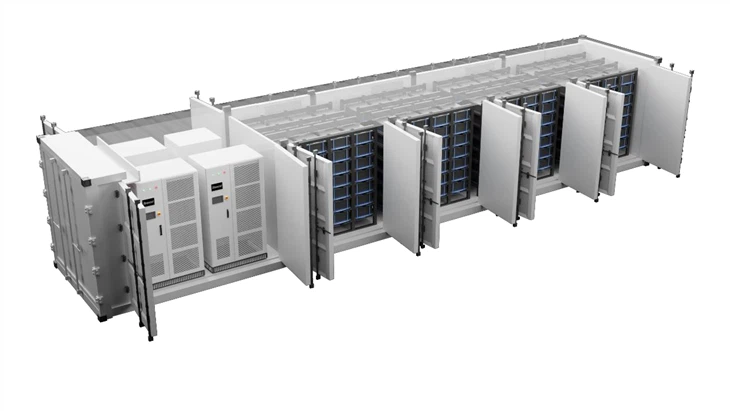
As a leading supplier of ESS battery systems, we are committed to providing our customers with products that have high power factors. Our lithium ion battery ess container is designed with advanced inverter technology to ensure a power factor close to 1 under normal operating conditions. The containerized design also allows for easy installation and integration into existing electrical systems.
Our ess module battery is another key product in our portfolio. These modules are carefully engineered to work in harmony with the inverter to optimize the power factor of the entire system. The modular design enables flexibility in system configuration, allowing customers to scale up or down the energy storage capacity according to their specific needs.
In addition, our ESS Battery Pack is built with high - quality lithium - ion cells and advanced battery management systems. The battery management system helps to ensure that the charging and discharging processes are carried out efficiently, minimizing any potential negative impacts on the power factor.
Importance of Power Factor for Our Customers
For our customers, a high power factor in the ESS battery system offers several benefits. First, it reduces energy losses in the electrical system, which translates into lower electricity costs. This is particularly important for industrial and commercial customers who consume large amounts of electricity.
Second, a high power factor can help to improve the overall reliability and stability of the electrical system. By reducing the current flow required to deliver the same amount of real power, the stress on the electrical equipment is reduced, leading to longer equipment lifetimes and fewer maintenance requirements.
Finally, in some regions, utilities may offer incentives or rebates for customers who maintain a high power factor. By using our high - power - factor ESS battery systems, our customers can take advantage of these incentives and further reduce their energy costs.
Conclusion
In conclusion, the power factor of an ESS battery system is a critical parameter that affects the efficiency, reliability, and cost - effectiveness of the system. As a supplier of ESS battery systems, we understand the importance of power factor and are dedicated to providing our customers with products that have high power factors. Our lithium ion battery ess container, ess module battery, and ESS Battery Pack are all designed to optimize the power factor and deliver superior performance.
If you are interested in learning more about our ESS battery systems or have specific requirements for your energy storage project, we encourage you to contact us for a detailed discussion. Our team of experts is ready to provide you with customized solutions and support to meet your needs.
References
- Chapman, S. J. (2012). Electric Machinery Fundamentals. McGraw - Hill Education.
- Dorf, R. C., & Svoboda, J. A. (2014). Introduction to Electric Circuits. Wiley.