

As a supplier of Energy Storage System (ESS) batteries, I often get asked about the backup time provided by our ESS batteries. This is a crucial question for many potential customers, as backup time directly impacts the reliability and effectiveness of an energy storage solution. In this blog post, I'll delve into the factors that determine the backup time of an ESS battery, how to calculate it, and how our products stack up in the market.
Understanding the Basics of ESS Battery Backup Time
The backup time of an ESS battery refers to the duration for which the battery can supply power to a load when the primary power source fails. It is measured in hours and is influenced by several key factors.
Battery Capacity
The capacity of an ESS battery is one of the most significant factors affecting backup time. It is typically measured in ampere - hours (Ah) or kilowatt - hours (kWh). A higher capacity battery can store more energy, which means it can power a load for a longer period. For example, a ESS Battery Pack with a capacity of 100 kWh can theoretically provide more backup time than one with a 50 kWh capacity, assuming the same load.
Load Power
The power demand of the load is another critical factor. If a load requires a high amount of power, the battery will discharge more quickly, reducing the backup time. For instance, a large industrial facility with heavy machinery may have a high - power load, while a small residential home may have a relatively low - power load. The backup time for the industrial facility will be shorter than that for the home, even if they use the same ESS battery.
Depth of Discharge (DoD)
The depth of discharge is the percentage of the battery's capacity that is used during a discharge cycle. Most ESS batteries have a recommended maximum DoD to ensure a long lifespan. For example, if a battery has a capacity of 100 kWh and a recommended DoD of 80%, only 80 kWh of the battery's capacity can be used effectively. This limitation also affects the backup time.
Battery Efficiency
Battery efficiency plays a role in determining backup time. No battery is 100% efficient, and some energy is lost during the charging and discharging processes. A more efficient battery will lose less energy, allowing it to provide more usable power and thus a longer backup time.
Calculating the Backup Time of an ESS Battery
The backup time can be calculated using a simple formula:
Backup Time (hours)= Battery Capacity (kWh)× DoD× Battery Efficiency / Load Power (kW)
Let's take an example to illustrate this. Suppose we have an ess module battery with a capacity of 50 kWh, a recommended DoD of 80%, a battery efficiency of 90%, and a load power of 5 kW.
First, we calculate the usable capacity of the battery: 50 kWh× 0.8 = 40 kWh.
Then, we account for the battery efficiency: 40 kWh× 0.9 = 36 kWh.
Finally, we calculate the backup time: 36 kWh / 5 kW = 7.2 hours.
Our ESS Battery Products and Backup Time
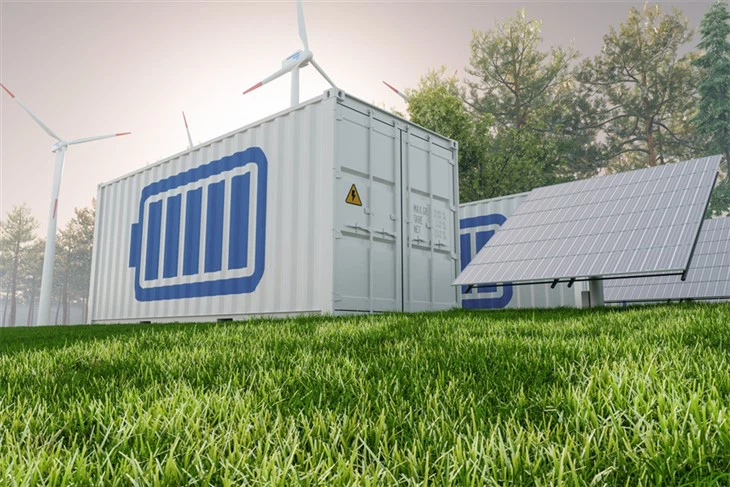
At our company, we offer a range of ESS batteries with different capacities and specifications to meet the diverse needs of our customers. Our lithium ion battery ess container is designed to provide reliable and long - lasting backup power.
We use advanced lithium - ion battery technology, which offers high energy density, long cycle life, and excellent efficiency. Our batteries are also equipped with intelligent battery management systems (BMS) that optimize the charging and discharging processes, further improving the backup time and overall performance.
For example, our high - capacity ESS Battery Packs are suitable for large - scale applications such as industrial plants and commercial buildings. These packs can provide backup power for several hours, depending on the load requirements. Our smaller ess module batteries are ideal for residential and small - scale commercial use, offering a more affordable and compact solution with a reasonable backup time.
Real - World Applications and Backup Time
In real - world applications, the backup time of our ESS batteries has been proven to be highly effective. In areas with unreliable grid power, our batteries have provided continuous power to critical facilities such as hospitals, data centers, and telecommunications towers.
For hospitals, which require a constant and reliable power supply to operate life - saving equipment, our ESS batteries can provide backup power for extended periods, ensuring the safety of patients. Data centers also rely on our batteries to prevent data loss and system downtime during power outages.
In residential applications, our ESS batteries can power essential appliances such as refrigerators, lights, and communication devices during a power outage. This not only provides convenience but also enhances the quality of life for homeowners.
Factors Affecting Backup Time in the Real World
In addition to the factors mentioned above, there are other real - world factors that can affect the backup time of an ESS battery.
Temperature
Battery performance is highly sensitive to temperature. Extreme temperatures, both hot and cold, can reduce the battery's capacity and efficiency, thereby shortening the backup time. Our ESS batteries are designed to operate within a wide temperature range, but in very harsh environments, additional temperature control measures may be required.
Aging
As a battery ages, its capacity gradually decreases. This means that the backup time will also decrease over time. However, our batteries are designed to have a long cycle life, and our BMS helps to slow down the aging process by ensuring proper charging and discharging.
How to Maximize the Backup Time of an ESS Battery
To get the most out of your ESS battery and maximize the backup time, there are several things you can do.
Optimize the Load
By reducing the power demand of the load, you can increase the backup time. This can be achieved by using energy - efficient appliances and turning off non - essential devices during a power outage.
Proper Installation and Maintenance
Ensure that the battery is installed correctly and maintained regularly. This includes checking the battery's state of charge, temperature, and overall condition. Following the manufacturer's recommendations for installation and maintenance will help to ensure optimal performance.
Choose the Right Battery
Selecting an ESS battery with the appropriate capacity, DoD, and efficiency for your specific application is crucial. Our team of experts can help you choose the right battery based on your load requirements and budget.
Conclusion
The backup time provided by an ESS battery is determined by several factors, including battery capacity, load power, depth of discharge, and battery efficiency. At our company, we are committed to providing high - quality ESS batteries that offer reliable and long - lasting backup power.
Whether you are a homeowner looking for a backup power solution or a large - scale industrial customer, our range of ess module battery, ESS Battery Pack, and lithium ion battery ess container products can meet your needs.
If you are interested in learning more about our ESS batteries and how they can provide the backup time you need, please contact us for a detailed consultation. We look forward to discussing your energy storage requirements and helping you find the best solution for your situation.
References
- "Battery Energy Storage Systems: Design and Implementation" by Dr. David Linden.
- "Lithium - Ion Batteries: Science and Technologies" by Y. - K. Sun, S. - T. Myung, and B. Scrosati.